How Startup Waitlists Work in the UK and How to Move to the Front of the Queue
Many waitlists rank people by what they do after signing up, not when they joined. Learn how prioritisation works, which tactics help, and what UK law says about your data.
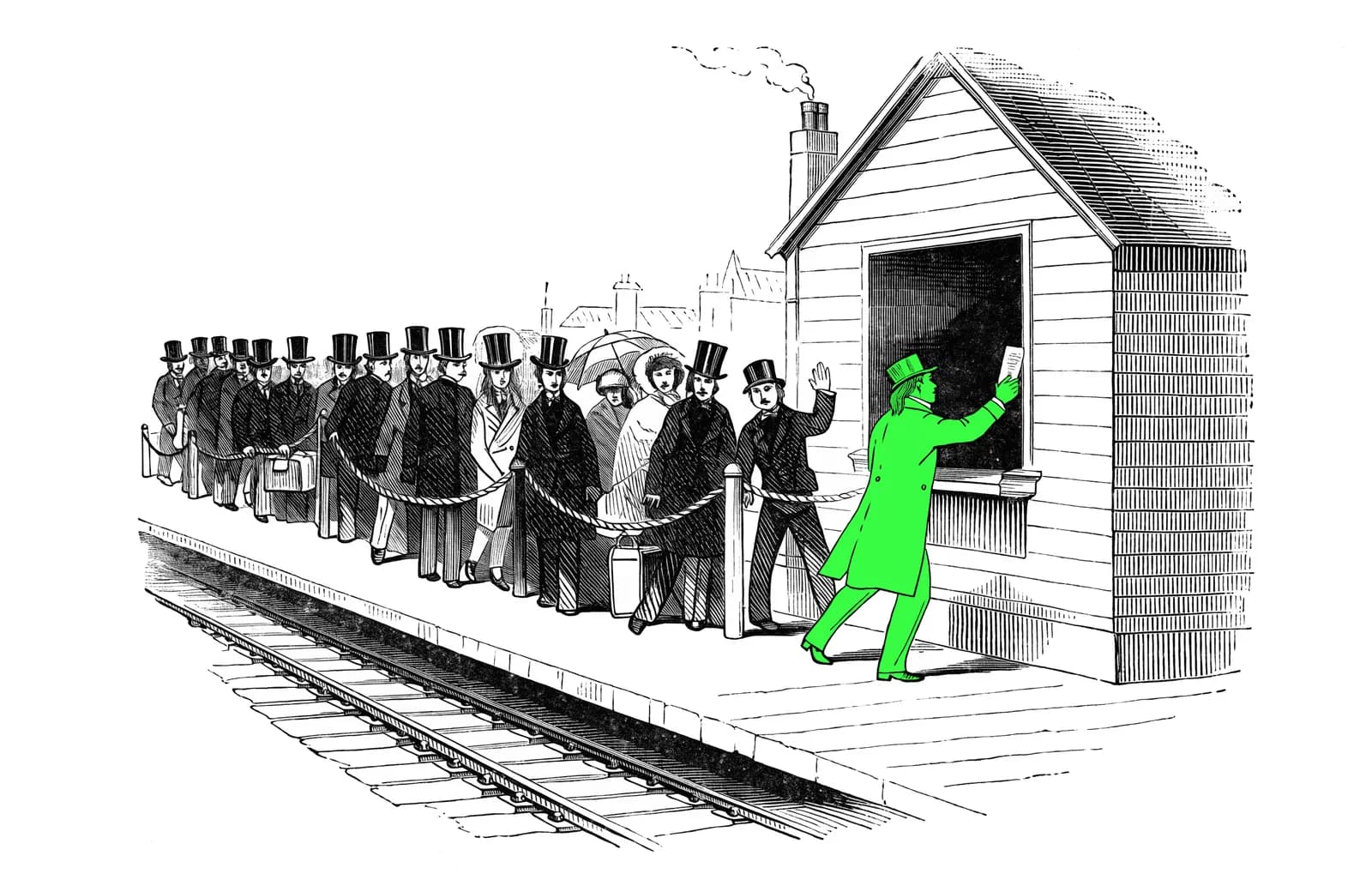
You spot a promising new app. You sign up for early access, get a confirmation email, and then nothing. Weeks pass. You assume the queue is first-come-first-served and your place is fixed. Often it is not.
Many startup waitlists are not passive queues at all. They are designed systems with rules, rewards and shortcuts that most people never notice. Founders can see who refers friends, who answers surveys and who opens emails, and some use that to decide who gets in first.
UK fintech helped popularise the idea. Monzo's waiting list and its "golden ticket" invites showed that a waitlist could be a growth engine as well as a holding pen.
In this post you will learn how waitlist prioritisation tends to work, which signals founders pay attention to, the practical tactics that can move you up the queue, and what your data rights look like under UK law.
Waitlists Are Often Not Queues. They Are Games.
Most people join a waitlist the way they join a bus queue: turn up, wait your turn, hope for a seat. With many modern waitlists that assumption is wrong.
Founders do not always sort their lists by sign-up time. Many waitlist tools let them rank people by what they do after signing up, such as referrals, survey responses, social shares and profile completeness. If points decide your position, someone who joined a week after you and referred three friends can end up ahead of you.
This shift happened because passive email collection often disappoints. A long list of addresses sounds impressive until you find that few of those people ever open an email. Founders increasingly want early cohorts who are active and will give feedback, not just numerous.
For you as an early adopter, that changes how to approach a waitlist. The mechanics are learnable, so a waitlist becomes something you can play rather than a lottery you passively enter. If there is a scoring system, it is usually explained on the sign-up page or in the welcome email, so read both.
Timing still matters: incentives tend to be richest before a waitlist fills up. That is where a directory like early.tools helps, surfacing waitlist-stage products as they appear so you can engage before the crowd arrives.
How Waitlist Prioritisation Typically Works
Not every waitlist works this way, but the points-based designs you are likely to meet share a few layers.
Points for actions. Referrals, completed profiles, survey responses and shares each earn points, and points set your position.
Referral ladders take this further. Rather than a flat reward per referral, many systems are tiered. In a typical design, your first few referrals might each move you up a set number of places, the next group might unlock a priority badge, and beyond that you might jump a whole cohort. Each successful referral compounds the benefit.
Leaderboards and milestone badges make all of this visible. When you can see that the top users have referred 20-plus people, the public ranking creates competitive pressure and social proof at once. Badges for milestones such as "Top 5% of waitlist" also hand founders organic sharing material, because people post their achievements.
Finally, profile completeness works as a trust signal. A detailed profile telling the founder who you are and how you plan to use the product marks you out as the kind of early adopter they are looking for.
What Monzo's Golden Tickets Showed
Those mechanics are not new, and a UK example shows how well they can work.
Monzo introduced a waiting list in March 2016 because it could not keep up with demand. Its golden ticket programme gave existing customers a link to send a friend, which let that friend skip the waiting list and open an account. Tom Blomfield, Monzo's founder, has described how customers received a single golden ticket after about two weeks of use, and that about 40% of Monzo's sign-ups in 2017 came from golden tickets, at no cost. Each customer became a distribution channel, and the product spread through real social networks rather than paid advertising.
Monzo ended its waiting list in May 2018 but kept golden tickets as an invitation mechanism. From late 2018 it also tried cash rewards for referrals. By September 2019 a Monzo community post said more than 100,000 customers had come through that scheme in July and August alone, and described the referral programme as one of its best tools to moderate growth, as it moved back to unrewarded golden tickets.
The lesson: that referral link in your welcome email is not a footnote. For many founders it is the mechanism the whole prioritisation system is built around.
Tactics That Can Move You Up the Queue
Now that you know the mechanics, here is how to put them to work. Which of these count depends on the programme, so check how each waitlist scores people.
1. Refer early, and refer selectively. Share your referral link with people who will actually use the product. Some founders track what your referrals do after they join, not just how many there are. One contact who opens every email and completes their profile may be worth more to your position than five who never log in again.
2. Treat the onboarding form like a job application. Fill in every field. Describe your role, your specific use case and what you want to achieve. Founders choosing early cohorts want users who will give meaningful feedback, and a detailed profile signals that. Vague answers get you treated like a passive sign-up.
3. Open emails, click updates and respond to surveys promptly. In systems that track engagement, silence can quietly cost you your position.
4. Join early, through a curated source. Finding a product via a curated directory usually means arriving earlier than people who find it through a viral social post, and early arrival often means the full incentive structure is still on offer.
5. Post about it publicly and tag the startup. A quick LinkedIn or X post about the waitlist you have joined may earn explicit points in systems that track social mentions. It takes thirty seconds and costs nothing.
6. Check the leaderboard if there is one. Public rankings show you what the top users have done. Treat them as a checklist rather than a scoreboard, and close the gap action by action.
The Engagement Signals Founders Tend to Watch
Knowing what to do is one thing. Understanding why it works gives you an edge.
Email engagement is one signal among several that founders can monitor. Here is the fuller picture.
Survey participation carries weight. When a founder sends a pre-launch research survey, answering it shows committed interest in a way that passive behaviour cannot, and it hands them product intelligence they need.
Social amplification extends a founder's reach at no cost to them. Posting about a product, sharing launch content or joining conversations in startup communities marks you as an advocate.
Return visits and session depth may matter if the waitlist page has interactive elements, because time on the page and repeat visits can be tracked. Exploring product details rather than landing and leaving may quietly help your standing.
Consistency beats intensity. A burst of activity followed by weeks of silence can hurt your score in systems that weight recency. Regular, low-effort engagement tends to beat one big day.
Your Data Rights on UK Waitlists: UK GDPR and PECR
All that engagement leaves a data footprint. Before you share your LinkedIn profile, complete a detailed onboarding form or post on social media to earn points, it is worth knowing what UK law expects of startups.
What founders must tell you
Under UK GDPR, an organisation collecting your personal data must tell you who it is, what data it collects, why, on what legal basis and how long it keeps it. This is a legal obligation, not optional small print. If a waitlist page has no privacy notice, that is a warning sign before you have typed anything.
Marketing emails and your right to opt out
Separately, the Privacy and Electronic Communications Regulations (PECR) cover marketing emails. Businesses generally need your consent before sending marketing emails to you as an individual, and the ICO's guidance is clear that pre-ticked boxes do not count as consent. The "soft opt-in" exception is narrow: it applies to people who have bought, or negotiated to buy, something from the sender, so it may not cover someone who has only joined a waitlist. Every marketing message must also offer an easy way to unsubscribe. If it is hard to opt out, you can complain to the ICO.
Why early adopters face higher exposure
Gamified waitlists ask for more than an email address. Profile forms, social sharing requirements and referral mechanics all involve disclosing personal data, and referrals involve other people's details too. Read the privacy policy before completing a long onboarding flow, particularly if a points system rewards you for sharing professional details or your contacts.
Enforcement is real
The ICO can investigate and fine organisations of any size, startups included. Since February 2026, changes made by the Data (Use and Access) Act 2025 have aligned the maximum fines for the most serious PECR breaches with UK GDPR levels.
The practical filter
A waitlist that clearly explains its points mechanics and how it uses your data suggests a thoughtful, well-run product. Transparency here is a reasonable proxy for quality elsewhere, and a useful shortcut when deciding how deeply to engage.
How to Find the Best Waitlists Before Everyone Else
Your rights matter, but none of that helps if you join a waitlist three weeks too late to win anything.
Timing compounds fast in gamified systems. Join early and referral incentives are still at full value, leaderboard positions are winnable and you have room to build a score before the crowd arrives. Join after a product trends and you are competing against users who already have weeks of referrals, badges and points banked. That gap is structural, not closeable by effort alone.
Discovery platforms exist to close that gap. On early.tools you can browse pre-launch products across waitlist, alpha and beta stages, curated by humans rather than by an algorithm. That filtering means you can find genuinely early-stage waitlists before they reach mainstream aggregators, giving you a real head start rather than arriving alongside the hype.
Browse by topic rather than scrolling everything. If your focus is fintech, health tech or productivity, topic pages let you scan only the relevant slice of new launches. You spot niche waitlists before the wider crowd does, which is where early-mover advantage lives.
Community signals can arrive even earlier. Founder communities, accelerator alumni groups and founder-focused newsletters sometimes announce waitlists before any aggregator picks them up. Following two or three well-connected communities in your sector is worth more than monitoring dozens of generic tech feeds.
Build a repeatable workflow. A five-minute daily check on a curated directory, plus one or two founder communities, is enough to stay ahead. Small habits compound, just like referral scores do.
Beat the Queue by Understanding the Game
Once you know how to find waitlists early, the last piece is what to do with the head start.
The single most useful point in this guide: on many waitlists, your sign-up timestamp matters less than you think, and your behaviour afterwards matters more. Referrals, a complete profile and consistent engagement compound fastest when you join before the hype arrives.
One last check: if a waitlist cannot clearly explain how it scores people or how it handles your data, that is a warning sign. Transparent mechanics and UK GDPR-compliant practices suggest a product worth trusting with your information.
Early adopters who treat a waitlist as an interactive system, rather than a form they filled in once, are the ones who most often reach the front of the queue.
Conclusion
Your next step is simple. Find a waitlist worth joining before it reaches mainstream attention, take every engagement step the moment it appears, and refer contacts who genuinely fit the product.
Early discovery, through curated platforms and founder communities, is what gives the other tactics room to work.
The queue is rarely random. It is a system, and now that you understand how it works, you have every reason to reach the front of it.