US Waitlists and Private Betas: When to Join or Walk Away
A startup waitlist can be a real queue or just a form with a progress bar. Five tests tell you when to join and when to walk away, borrowing from the FTC's work on fake scarcity.
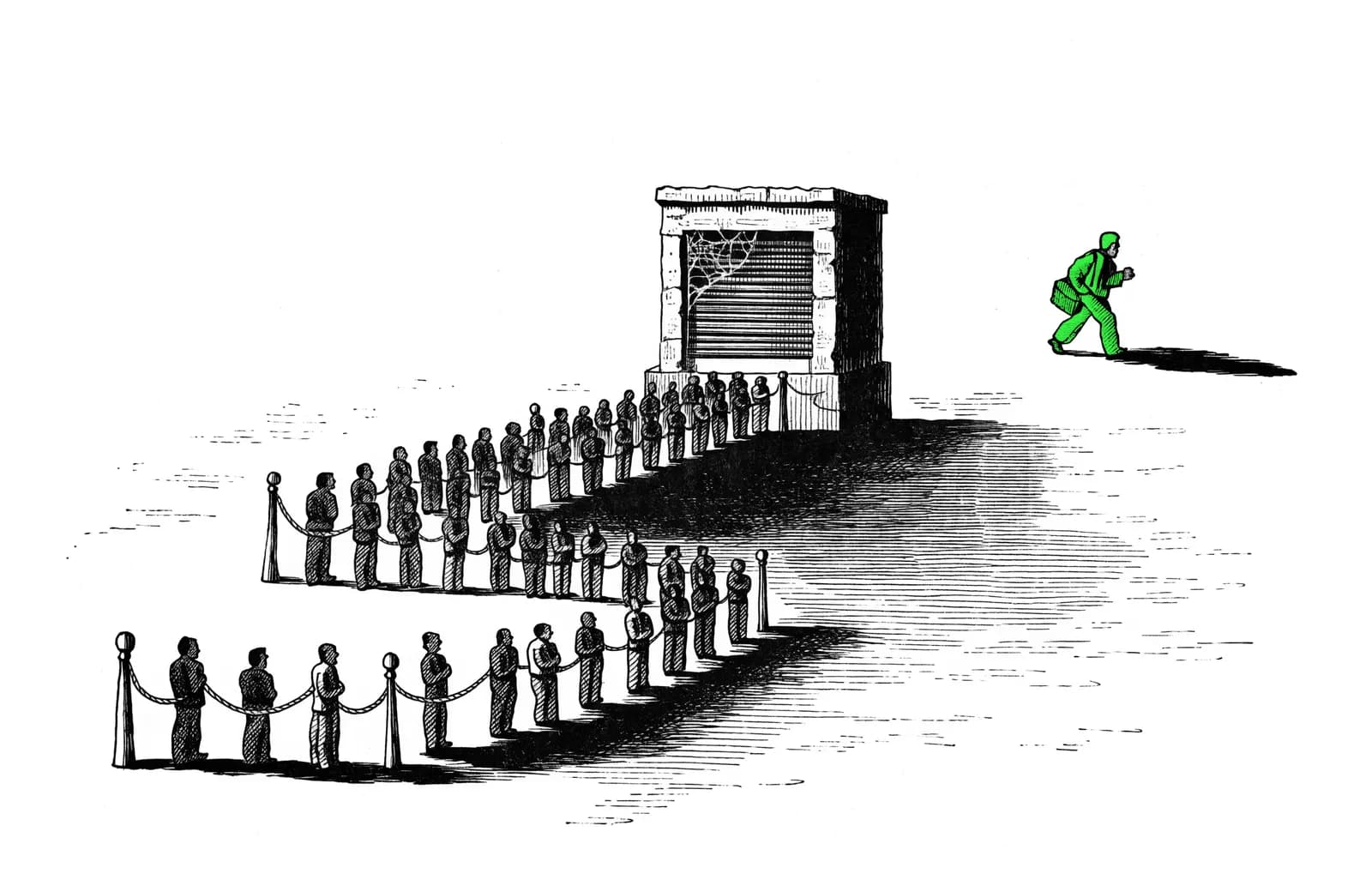
A startup waitlist can look like a golden ticket. In practice it is often a form with a progress bar, a vague launch date and no way to tell whether access will ever arrive. This guide treats joining as an evaluation, not a recruitment pitch.
For US users, the useful question is not "how do I get in?" but "is this queue worth my email, my attention and my patience?" Below: when a waitlist is worth joining because access is real and tied to a need you already have, and when to walk away because the product is only a promise and the queue has no visible mechanism. Along the way we borrow from the FTC's work on dark patterns, especially fake scarcity and fake urgency.
A waitlist signup is a real decision
Signing up feels like bookmarking a page. It is not. You hand over an email address, sometimes a phone number, sometimes a referral graph that shows who in your network trusts you. In return you get a claim on future access that may never be honored. That is a trade, and it deserves the scrutiny you would give any other.
The thesis is simple. Join when the access is real, time-limited and your use case exists today. Walk away when the product is only a promise and nothing in the queue moves. Most waitlist content is written to get you in, not to ask whether the line ever moves, so the evaluation side is the gap worth filling.
One note on method: the join and walk-away criteria below are our own framework, not a published standard. Where no waitlist-specific evidence exists, we say so and label claims as hypotheses.
The closest legal analogue: fake scarcity and fake urgency
There is no regulatory guidance written for startup waitlists, but there is a useful analogue. The FTC's September 2022 staff report, Bringing Dark Patterns to Light, describes dark patterns as design practices that trick or manipulate users into choices they would not otherwise make and that may cause harm. The term was coined in 2010 by the designer Harry Brignull.
Two categories in the report map neatly onto queues:
- Scarcity covers false messages about low stock or high demand, such as "only two left" when stock is plentiful.
- Urgency covers false deadlines, including countdown clocks that reset or disappear when they run out.
The report's one headline number: a study discussed at the FTC's workshop found that dark patterns doubled the share of consumers who signed up for a dubious identity theft protection service, compared with a neutral interface, and the effect grew when people met more than one pattern.
The FTC also looks at net impression. Companies are on the hook for the overall impression their design conveys, not just whether each statement is literally true. That standard sits under the FTC Act's prohibition on deceptive practices.
The honest caveat: the report does not address startup waitlists or private betas. Fake scarcity is the nearest documented parallel, so any waitlist comparison below is a hypothesis, not an established finding.
The join test: when a waitlist is worth your email
Treat the analogue as a filter. Five signals separate access from a promise.
Access is real. Look for something falsifiable: a dated beta cohort, named batch sizes, a changelog, screenshots from real users, a founder shipping in public. If the strongest evidence is a landing-page illustration, you are being sold a promise.
Access is time-limited. A queue that says when it converts, and to what, is a queue. One that says nothing is an indefinite holding pattern.
Your use case exists now. Would you use this today, at the stated price, if it shipped tomorrow? Curiosity is not a use case, and neither is hoping the tool becomes useful after two more roadmap years.
The mechanism is disclosed. Batch sizes, referral rules, geography limits and invite dates need specific numbers and dates, not "we are letting people in every week" repeated monthly.
The exit is clean. There should be a privacy policy, an unsubscribe or delete path, and no requirement to import contacts or post publicly. A waitlist that cannot say how to leave does not get your main email address.
Five yes answers mean join. Anything less sends you to the walk-away test.
The walk-away test: when the queue has no mechanism
The join test looks for a disclosed mechanism. The walk-away test ends the consideration when there is none.
A decorative position counter. If "2,000 people ahead of you" never drops, never resets and never matches a batch release, treat it as unverified. It is the closest waitlist parallel to a fake low-stock message, and a hypothesis worth testing rather than accepting.
Urgency with no consequence. Timers that expire and quietly restart, or "closing soon" banners that outlive their deadline, match the countdown-clock pattern the FTC report describes.
Access priced in amplification. If the queue advances only when you invite five friends or post a referral link, and there is no product date, you are doing unpaid distribution for an unbuilt product.
Missing disclosure. No privacy policy, no company name, no contact address and no statement about your data are disqualifiers, especially for a beta that wants an account before it explains itself.
Demanded permanence. Keeping an app installed, signing an NDA you have not read, or staying active to hold your spot turns a trial into a commitment. Time-limited access is the standard; open-ended obligation is the red flag.
When several of these stack, stop waiting and start watching. Beta listings can be tracked without holding a slot in anyone's queue.
Where waitlist hype shades into regulated territory
When a decorative counter, a resetting timer and referral pressure appear together, the risk compounds. The FTC report says dark patterns "often are not used in isolation and tend to have even stronger effects when they are combined", which is why a stacked queue deserves more scrutiny than a single odd claim.
In the US, enforcement has run mainly through existing law, chiefly the FTC Act's ban on deceptive practices, rather than a federal dark-pattern statute. Some state privacy laws now name dark patterns directly. California's CCPA, for example, defines the term and says agreement obtained through dark patterns is not consent. For the timeline of FTC attention: an April 2021 public workshop, an October 2021 enforcement policy statement on negative option marketing, and the September 2022 staff report.
This describes a risk pattern, not an accusation. The narrow claim is that a queue with no stated mechanism merits scrutiny because fake scarcity is named in the regulatory record.
The cost side: data, attention and optionality
Regulation is the outside risk. The ledger you actually pay from looks like this.
Data. A signup can collect an email, phone number, company, role and a referral graph. Each extra field should buy something concrete, such as a dated invite, a named cohort or a clear data policy. Otherwise it is extraction.
Attention. Waiting on a private beta produces low-grade, recurring checking with no payoff until launch.
Optionality. A slot you are holding is not a tool you are using. Every queue competes with something that already works.
Commitment. Some betas require exclusivity, embargoed feedback or testing obligations. That is reasonable for a product you would pay for and unreasonable for one you joined out of curiosity.
A practical cap. Keep three to five active queues at most. Review each at 30, 60 and 90 days, and drop any that has produced no dated progress.
A slow launch is not a dark pattern
Cost accounting tells you when to leave. It does not tell you when you have found a bad actor, and mixing the two weakens your judgment.
Slow is not deceptive. Rewrites, funding timelines, security reviews and compliance waits legitimately push launches out by quarters, and plenty of honest products slip. Disclosure is the variable that matters, not speed. A company that names the delay and resets a date behaves differently from one that keeps a counter spinning and says nothing.
Write criticism with the precision you would want applied to you. "The queue published no mechanism or dates across three months" is a defensible observation. "This is a scam" is unsupported. Keep the burden of evidence symmetrical: demand specifics before joining, and have them before you condemn.
How to track pre-launch products without chasing dead queues
Stop treating queue membership as your tracking method. Use the 30/60/90-day review above and record whether anything dated changed: a changelog entry, a cohort announcement, a public status page, a pricing page. Anything undated does not count.
Judge the evidence trail, not the marketing copy. Public build logs, founder posts with screen recordings and screenshots from real users outweigh any badge that claims to hold your place.
Compare against what has already shipped. Early.tools lists early-stage products by stage, from waitlist to beta to launched, so you can see whether your category already has something working before you wait months for something promised.
Track categories, not single companies. If three products in one category promise private betas and none ships within a quarter, that is a category signal rather than one bad actor. Keep a short written log of what each promised and when; a dated note is the only way to tell a slow launch from an abandoned one six months later.
Your three-question checklist
Before your next signup, ask:
- Is the access real and dated?
- Is it time-limited, with a stated conversion?
- Does my use case exist today?
Three yes answers mean join. Two no answers mean walk. Then run the review loop: log the date you joined, and leave when the counter is the only thing that ever moves.
The FTC's net-impression standard is why stacked signals, such as a counter, a timer and referral pressure, compound the risk. A queue with no stated mechanism deserves your scrutiny, not your accusation. Spend your attention where it compounds, and commit your email to products already shipping something you would actually use.